
Projects
My scholarship uses critical qualitative methods to explore the roles educators, policymakers, families, and young people play in sustaining and interrupting racialized inequality in urban schools.
I ground my questions in the empirical dilemmas that stakeholders negotiate on a daily basis, troubling taken-for-granted assumptions about student demographics, educational justice, and school policy.
Deliberative Dialogues
and District Enrollment Policies
This Research-Practice Partnerships develops new approaches to democratic, community-informed district governance. We address nationwide trends of decreasing student enrollment and increasing school segregation by expanding district leaders’ capacity to engage the expertise of racially and politically diverse constituents. We piloted our approach in New York City and Winston-Salem, NC, supporting district partners in developing new enrollment and diversity plans and practices. We are now supporting four NYC community school districts as they collaborate with educators, families, and community groups to develop a plan for using school buildings as public school enrollment declines.
-
Deliberative democratic dialogues are a structured approach to bringing together constituents to solve public problems. Our approach brings together the principles of deliberative dialogue , race-conscious policymaking, and a flexible design that responds to the needs of district communities. We support districts in engaging community members in policy decisions, collaborating on a dialogue plan based on its unique needs and priorities, including district demographics and histories, personnel considerations, and previous community engagement efforts. The data we collect informs both district planning and our research.
-
The Tiger Foundation
The Jordan Family Foundation
American Institutes for Research Opportunity Fund
The Spencer Foundation

Black and Latino
studies mandates
in connecticut high schools
In December 2021, Connecticut Governor Ned Lamont signed a bill requiring all high schools to offer elective courses on African-American, Black, Puerto Rican, and Latino Studies. This course, frequently called the “Black and Latino Studies Elective,” affected over 165,000 students in 192 Connecticut public high schools and was the first Black and Latino Studies statewide mandate to be enacted in the United States. This project examines how the mandate is unfolding at high schools across the state.
-
My research assistants and I are analyzing course enrollment data, surveying educational leaders, and interviewing school and district administrators about the decisions they made as they brought this course into their schools. We examine benefits and challenges of the curricular mandates, in light of policymakers’ and advocates’ goals, the implementation process, and school-based outcomes.
-
UConn Research Excellence Program
-
Cooke, H. & Freidus, A. (November 2024.) “Mandating an Elective? The Implementation of Black and Latino Studies Courses in Connecticut High Schools.” UConn Today.

Youth Activism
for School Integration
This study focuses on the possibilities and constraints of youth organizing as a vehicle for civic learning and a lever for policy change. I examine how teen activists intervene in the contested policy landscape of the nation’s largest school system; the extent to which youth advocacy influences policymaking processes; and how young people’s engagement in this work shapes their civic skills and identities.
-
This project centers the perspectives of youth organizers in Teens Take Charge, an organization advocating for educational equity and school desegregation in New York City high schools. I engaged with participants as partners in the work throughout the data collection and analysis processes. One published paper analyzes the role whiteness plays in integration advocacy, and a book chapter examines White young people’s learning as racialized civic actors. A forthcoming paper examines the changing views and experiences of Teens Take Charge organizers over three crucial years, as they graduated high school, navigated the COVID-19 pandemic, and took on new civic identities.
-
Freidus, Alexandra. 2023. “White Organizers or White Organizations? Activism and Identity in a Youth-Led Movement for School Integration.” Harvard Educational Review.
-
Spencer Foundation Racial Equity Grant
National Academy of Education/Spencer Foundation Research Development Award
Seton Hall University Research Council

Covid-19
School Reopening Debates
These studies examine public debates and stakeholder responses to reopening school buildings and parental choice policies. My colleagues and I identify the multiple, at times conflicting claims over how to best serve diverse students and communities during and beyond the pandemic.
-
Dr. Erica Turner (University of Wisconsin) and I gathered a unique dataset that documents equity debates in New York City during the summer and fall of 2020, using news articles and opinion pieces published between June 1, 2020 and December 15, 2020 from major NYC education news sources reflecting a range of political stances. We analyze the stakes involved in seemingly technical policy making decisions like school reopening and the challenges of achieving just educational policy.
In a related line of work, we have collaborated with Dr. Rachel Fish (Smith College) on a series of papers related to the experiences of disabled students and their caregivers during the pandemic. We examine how the pandemic amplified both the marginalization of disabled children and the discourses of risk, protection, and vulnerability that permeate debates over how to best educate students with disabilities.
-
Fish, R. E., Freidus, A., & Turner, Erica O. (2025). “Weighing Risks: How Families of Disabled Children Made School Choices During COVID-19.” AERA Open.
Freidus, Alexandra and Erica Turner. “Contested Justice: New York City’s COVID-19 School Reopening Debates.” Educational Evaluation and Policy Analysis.
Freidus, Alexandra, Rachel Fish, and Erica Turner. 2025. “Risk, Protection, and Vulnerability: Pandemic Discourses about the Schooling of Disabled Children in New York City.” In How to Be Disabled in a Pandemic, edited by Mara Mills, Rayna Rapp, and Faye Ginsburg. New York University Press. Now available for open access and download here.

Diversifying Schools
in Gentrifying New York
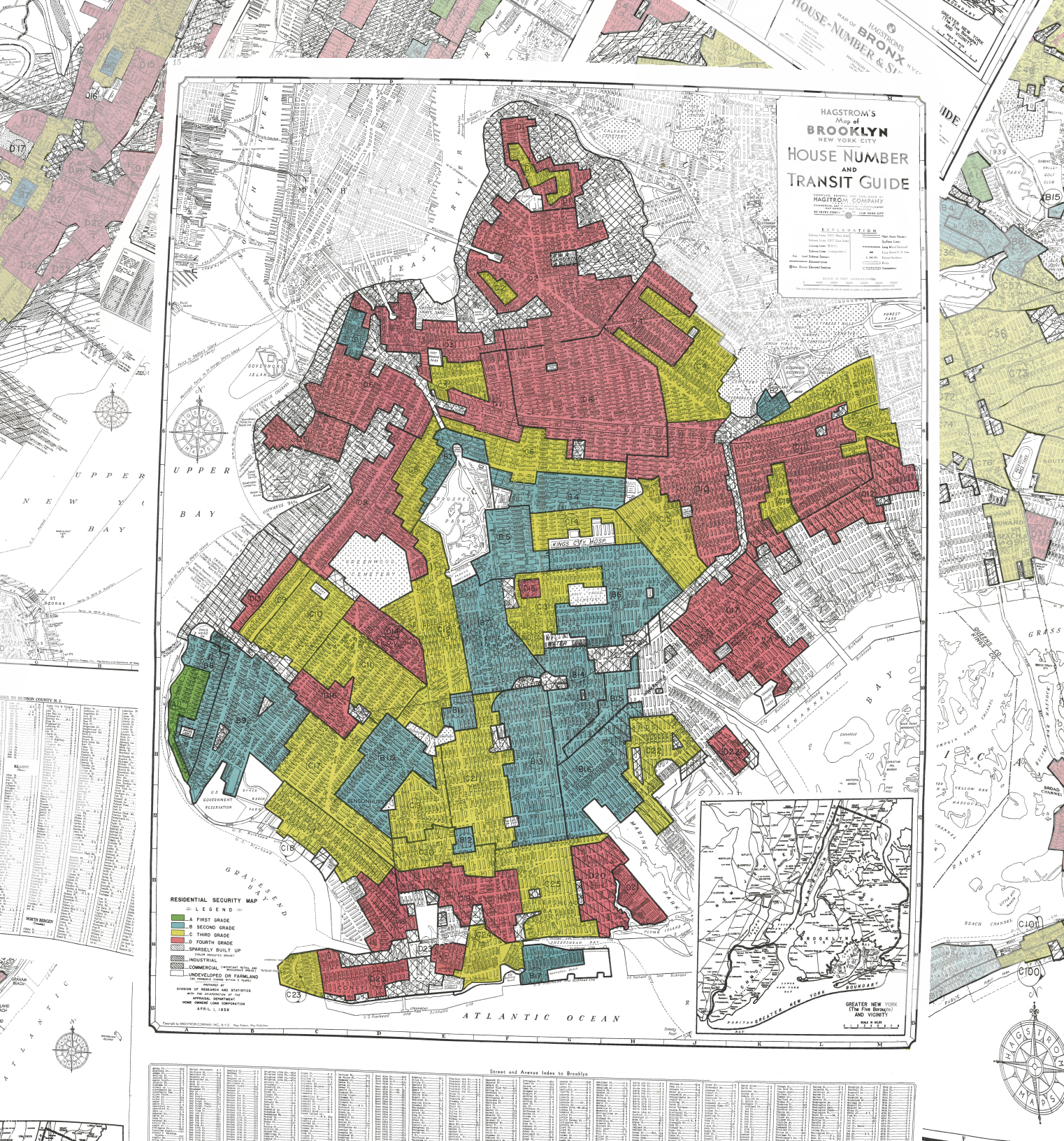
Amid widespread claims that increased racial and socioeconomic diversity yields greater educational equity, research on what happens within the classrooms (rather than PTA or staff meetings) of gentrifying schools is surprisingly scarce. I have devoted one body of work to the impact of demographic change on schools in gentrifying areas of New York City, one of the country’s most segregated school systems. This book and series of papers complicates widely-held but often under-examined assumptions about the benefits of school diversity.
-
In one line of inquiry, I examine what is taught and what is learned through the hidden curriculum of diversifying schools. In papers focused on teaching and learning in diversifying schools, I look closely at the role whiteness plays in curriculum, academic sorting, and school discipline processes.
Another line of inquiry examines the social and political contexts of these classrooms, focusing on the complicated relationship between school gentrification and educational equity. These papers trace the braided discourses of diversity and pathology that mark debates over school demographics and examine the hopes and fears that school community members bring to diversifying schools in gentrifying communities.
Overall, these studies demonstrate that shifts in school demographics and even a commitment to equity are not sufficient to address racialized patterns of inequitable academic and discipline outcomes. I illustrate the need for expanded, nuanced examinations of how educators and policymakers can address racialized disparities in school outcomes.
-
Freidus, Alexandra. 2022. “Segregation, Diversity, and Pathology: Constructing School Quality in Gentrifying New York.” Educational Policy 36(4).
Freidus, Alexandra. 2021. “Looking Smart: Race and Ability in a Diversifying Middle School.” Anthropology and Education Quarterly 53(2).
Freidus, Alexandra. 2021. “Problem Children and Children with Problems: Discipline and Innocence in a Gentrifying Elementary School.” Harvard Educational Review 90(4): 550-572.
Freidus, Alexandra. 2020. “Modes of Belonging: Debating School Demographics in Gentrifying New York.” American Educational Research Journal 57(2): 808-839.
Freidus, Alexandra. 2020. “’I Didn’t Have a Lesson’: Politics and Pedagogy in a Diversifying Middle School.” Teachers College Record 122(7).
Freidus, Alexandra. 2019. “‘A Great School Benefits Us All’: Advantaged Parents and the Gentrification of an Urban Public School.” Urban Education 54(8): 1121-1128.
Freidus, Alexandra and Pedro Noguera. 2017. “Making Difference Matter: Teaching and Learning in Desegregated Classrooms.” The Teacher Educator 52 (2): 99-113.
-
National Academy of Education/Spencer Dissertation Fellowship
NYU Steinhardt Mitchell Leaska Dissertation Research Award
Fahs-Beck Fund for Social Research